Embarking on a journey to better health often begins in the kitchen, and for many, that means embracing the vibrant world of fresh fruit and vegetable juices. A high-quality fruit juicer machine is not just another appliance; it’s an investment in your well-being, transforming raw produce into nutrient-dense elixirs that invigorate your body and mind. But with a dizzying array of models and technologies available, how do you choose the “best” one for your needs? This comprehensive guide will navigate you through the essential factors, popular types, and top recommendations to help you make an informed decision and unlock a healthier lifestyle.
What is a Fruit Juicer Machine? Why Do You Need One?
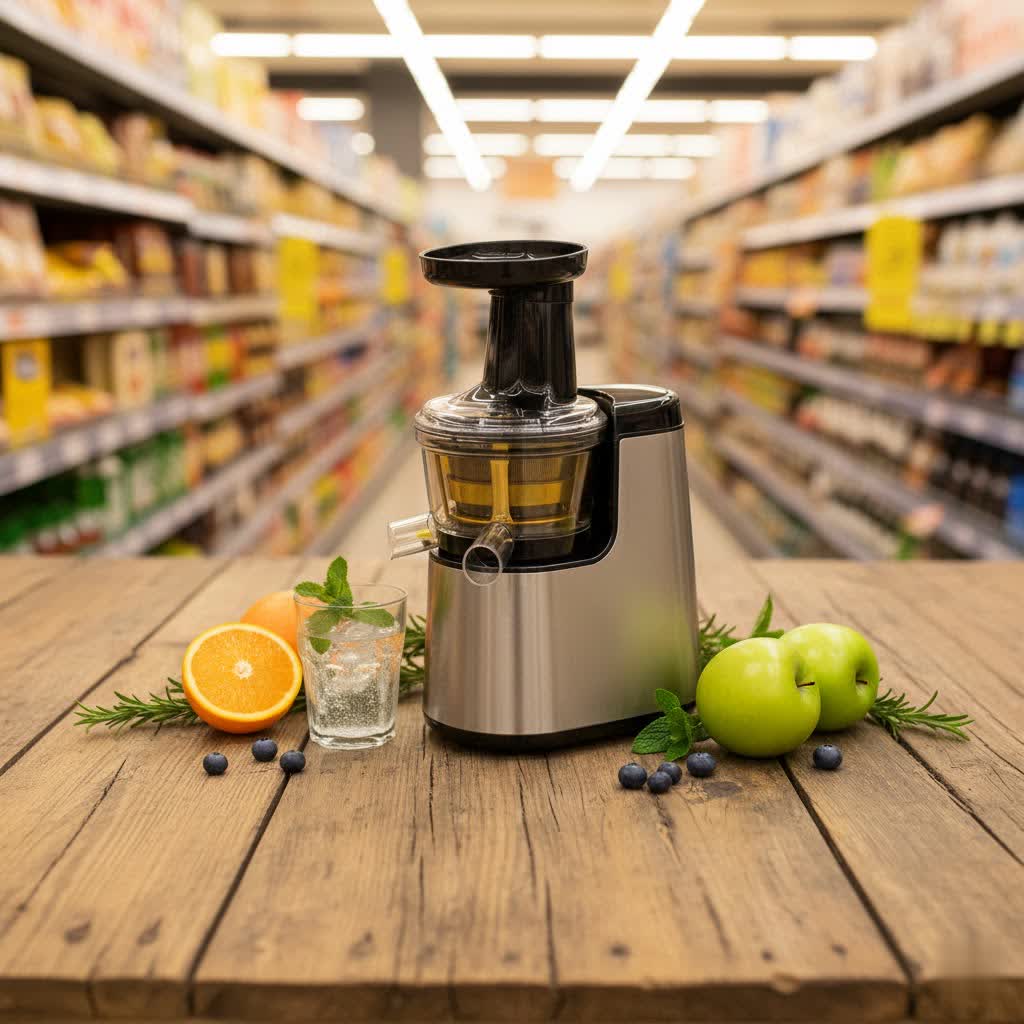
A fruit juicer machine is a kitchen appliance designed to extract liquid from fruits and vegetables, separating the juice from the pulp. It’s a simple yet powerful tool that allows you to easily incorporate a wider variety of produce into your diet, bypassing the need to consume large quantities of whole fruits and vegetables.
The benefits of regular juicing are extensive. Freshly made juice is packed with essential vitamins, minerals, and enzymes that are readily absorbed by your body, offering a potent boost to your immune system and overall vitality. Unlike store-bought options, homemade juice allows you complete control over ingredients, enabling you to avoid added sugars, preservatives, and artificial flavors. You can experiment with unique flavor combinations, tailor recipes to specific health goals, and even save money in the long run compared to purchasing daily pre-made juices. Ultimately, a juicer empowers you to take an active role in nurturing your health with delicious, customized beverages.
Popular Types of Fruit Juicer Machines
The world of juicers can be broadly categorized into a few main types, each with distinct advantages and disadvantages. Understanding these differences is crucial for selecting the machine that aligns with your juicing habits and desired juice quality.
Centrifugal Juicers
Often considered the entry-level option, centrifugal juicers operate at high speeds, using a rapidly spinning blade to grate produce against a fine mesh sieve. The centrifugal force then separates the juice from the pulp, funneling them into different containers.
- Advantages:
- Speed: Centrifugal juicers are incredibly fast, producing a glass of juice in a matter of seconds. This makes them ideal for quick morning routines.
- Affordability: Generally, these models are more budget-friendly, offering an accessible entry point into juicing.
- Minimal Prep Work: Many centrifugal juicers feature wide feed chutes that can accommodate larger pieces of fruit and vegetables, reducing chopping time.
- Ease of Use: Their straightforward operation and simple designs make them convenient for beginners.
- Disadvantages:
- Noise Level: Due to their high-speed motors, centrifugal juicers can be quite loud during operation.
- Juice Quality: The high speed can introduce more oxygen and heat during extraction, potentially leading to faster oxidation and some degradation of delicate nutrients and enzymes.
- Yield: They typically produce a wetter pulp, indicating a lower juice yield compared to slower methods.
- Limited Versatility: Centrifugal juicers often struggle with leafy greens and soft fruits, which can result in less efficient extraction and more foam.
- Best for: Beginners, those on a budget, individuals prioritizing speed, and those mainly juicing hard fruits and vegetables like apples and carrots.
|
Our Picks for the Best Fruit Juicer in 2026
As an Amazon Associate I earn from qualifying purchases.
|
||
| Num | Product | Action |
|---|---|---|
| 1 | QCen Juicer Machine, 500W Centrifugal Juicer Extractor with Wide Mouth 3” Feed Chute for Fruit Vegetable, Easy to Clean, Stainless Steel, BPA-free (Aqua) |

|
| 2 | Juicer Machine, 800W Centrifugal Juicer Extractor with Wide Mouth 3” Feed Chute for Fruit Vegetable, Easy to Clean, Stainless Steel, BPA-free (Metallic Black) |
|
| 3 | Juicer Machine, 800W Centrifugal Juicer Extractor with Wide Mouth 3” Feed Chute for Fruit Vegetable, Easy to Clean, Stainless Steel, BPA-free (Green) |
|
| 4 | QCen Juicer Machine, 500W Centrifugal Juicer Extractor with Wide Mouth 3” Feed Chute for Fruit Vegetable, Easy to Clean, Stainless Steel, BPA-free (Green) |
|
| 5 | Juicer Machine, 800W Centrifugal Juicer Extractor with Wide Mouth 3” Feed Chute for Fruit Vegetable, Easy to Clean, Stainless Steel, BPA-free (Aqua) |
|
| 6 | Juicer Machine, 800W Centrifugal Juicer Extractor with Wide Mouth 3” Feed Chute for Fruit Vegetable, Easy to Clean, Stainless Steel, BPA-free (Metallic Red) |
|
| 7 | Qcen Juicer Machine, 500W Centrifugal Juicer Extractor with Wide Mouth 3” Feed Chute for Fruit Vegetable, Easy to Clean, Stainless Steel, BPA-free (Black) |
|
| 8 | QCen Juicer Machine, 500W Centrifugal Juicer Extractor with Wide Mouth 3” Feed Chute for Fruit Vegetable, Easy to Clean, Stainless Steel, BPA-free (Gold) |
|
| 9 | Juicer Machine, 800W Centrifugal Juicer Extractor with Wide Mouth 3” Feed Chute for Fruit Vegetable, Easy to Clean, Stainless Steel, BPA-free (Gold) |
|
| 10 | Qcen Juicer Machine, 800W Centrifugal Juicer Extractor with Wide Mouth 3” Feed Chute for Fruit Vegetable, Easy to Clean, Stainless Steel, BPA-free (Black) |
|
Masticating (Slow/Cold Press) Juicers
Masticating juicers, also known as slow juicers or cold press juicers, employ a single auger (a corkscrew-shaped mechanism) to crush and press produce slowly against a screen. This “chewing” action gently extracts juice without generating significant heat or introducing much oxygen.
- Advantages:
- Higher Juice Yield: By thoroughly crushing and pressing ingredients, masticating juicers extract more juice, resulting in drier pulp and less waste.
- Nutrient Retention: The slow, low-heat extraction process helps preserve more vitamins, minerals, and enzymes, leading to a higher nutritional value and longer shelf life for the juice (up to 48-72 hours when stored properly).
- Quiet Operation: Operating at lower speeds, these juicers are significantly quieter than their centrifugal counterparts, making them suitable for early morning use without disturbing others.
- Versatility: Masticating juicers excel at processing a wide variety of produce, including leafy greens (kale, spinach, wheatgrass), soft fruits, and fibrous vegetables, which centrifugal models often struggle with.
- Disadvantages:
- Slower Speed: The juicing process takes considerably longer due to the slow pressing action.
- Higher Cost: Masticating juicers are typically more expensive upfront than centrifugal models.
- More Prep Work: Many models have narrower feed chutes, requiring you to pre-chop ingredients into smaller pieces.
- Best for: Health enthusiasts, those who prioritize nutrient preservation, regular juicers, and individuals who frequently juice leafy greens and soft fruits.
Triturating (Twin-Gear) Juicers
A specialized type of masticating juicer, triturating or twin-gear juicers use two interlocking gears to grind produce even more finely. They are renowned for their exceptional juice quality and yield.
- Advantages: They offer the highest juice yield and best nutrient preservation, especially for leafy greens. Some can even perform other tasks like making nut butter or pasta.
- Disadvantages: Very expensive, often complex to assemble and clean, and take the longest to process ingredients.
- Best for: Dedicated raw foodists or those seeking the absolute highest quality and most versatile juicing experience, with a significant budget.
Citrus Juicers
These are specialized appliances designed solely for juicing citrus fruits like oranges, lemons, limes, and grapefruits. They can be manual or electric, with a reamer that extracts juice from halved citrus.
- Advantages: Efficiently extracts juice from citrus fruits, easy to use, often compact.
- Disadvantages: Limited to citrus only.
- Best for: Individuals who frequently consume or cook with citrus juice and prefer a dedicated appliance for this task.
Detailed Comparison of Fruit Juicer Types
| Feature / Juicer Type | Centrifugal Juicer | Masticating (Slow/Cold Press) Juicer |
|---|---|---|
| Speed | Very fast (seconds per glass) | Slow (minutes per glass) |
| Juice Quality | Good, but more foam, potential nutrient loss due to heat/oxidation | Excellent, minimal foam, maximum nutrient retention, longer shelf life |
| Juice Yield | Lower (wetter pulp) | Higher (drier pulp) |
| Produce Types | Best for hard fruits/veggies; struggles with leafy greens and soft fruits | Excellent for all produce, especially leafy greens, wheatgrass, soft fruits |
| Noise Level | Loud | Quiet |
| Price Range | Affordable to Mid-range | Mid-range to High-end |
| Ease of Cleaning | Generally easy, often dishwasher-safe parts, but mesh can be tricky | Can have many parts, often hand-wash only, but usually comes with cleaning brushes |
| Prep Work | Minimal (wide chutes) | More (narrow chutes often require pre-chopping) |
Top Best Fruit Juicer Machines Today
Based on expert reviews and user feedback, here are some of the most popular and highly-rated fruit juicer machines available, catering to different needs and budgets:
-
Ninja Cold Press Juicer JC151UK (Best Cold Press Juicer)
- Pros: Features an anti-clog filter, comes with two filters for customizable juice texture (smooth or pulpy), easy to use with thorough manual and recipe booklet, fully recyclable packaging. Parts are dishwasher-safe.
- Cons: Can be noisy, relatively large footprint, narrower feeding chute requires pre-chopping.
- Key Features: 150W motor, 700ml jug capacity.
- Ideal for: Those new to cold press juicing who want high-quality juice and an anti-clogging feature.
-
Kuvings Auto 6 Hand Juicer (Best Slow Juicer for Ease of Use)
- Pros: Highly intuitive with a simple one-button operation, reverse function for blockages, very quiet operation, comes with an ice cream maker attachment, long 15-year engine warranty.
- Cons: Not dishwasher-safe, can have excessive packaging.
- Key Features: 200W motor, 1.7L hopper, 4cm-wide feeding chute for chopped ingredients.
- Ideal for: Smaller families or kitchens, health-conscious users seeking high-quality juice and versatile functionality, without excessive noise.
-
Nutribullet Juicer Pro (Best Centrifugal Juicer)
- Pros: Speedy operation for quick juice, easy to assemble, many parts are dishwasher-safe, comes with useful accessories.
- Cons: Loud during operation, can be bulky and takes up significant counter space, may struggle with leafy greens, produces more foam.
- Key Features: 1000W motor.
- Ideal for: Individuals who prioritize speed and convenience, beginners, and those on a moderate budget mainly juicing hard fruits.
-
Sage The Nutri Juicer Cold Plus (Best for Large Quantities)
- Pros: Sleek design, wide chute eliminates most pre-cutting, large-capacity 2-liter jug with sealed lid for fridge storage, multiple speed options, powerful motor.
- Cons: Heavy and bulky, can be loud, struggles with leafy greens.
- Key Features: 1200W-1300W motor.
- Ideal for: Families or individuals who make large batches of juice and value a powerful, fast juicing experience for harder produce.
-
Magic Bullet Mini Juicer (Best Compact Juicer)
- Pros: Small footprint ideal for compact kitchens, easy to assemble, dispenses directly into a to-go cup.
- Cons: Only makes individual portions (470ml), noisy, not recommended for frozen fruits or vegetables.
- Key Features: 400W motor.
- Ideal for: Single users or those with limited counter space who need a quick, personal serving of juice.
How to Choose the Right Fruit Juicer Machine
Selecting the perfect juicer involves weighing your personal needs and preferences against the features and capabilities of different models. Consider these key factors:
- Determine Your Usage Needs:
- What produce will you juice? If leafy greens and wheatgrass are staples, a masticating juicer is superior. For hard fruits and vegetables, both types work, but masticating offers better yield.
- How often will you juice? Daily juicers might benefit more from a higher-yield masticating model, while occasional juicers might prefer the speed and lower cost of a centrifugal one.
- What quantity of juice do you need? For single servings, compact or smaller models are fine. For families or batch making, look for larger hoppers and pulp bins.
- Set Your Budget: Juicers range widely in price. While more expensive models often offer better performance and durability, affordable options can still be excellent for specific needs. View your purchase as an investment in your health.
- Consider Other Factors:
- Noise Level: If you plan to juice early mornings or in a shared living space, a quieter masticating juicer might be preferable.
- Ease of Cleaning: Look for models with dishwasher-safe parts and minimal components. Cleaning brushes can be very helpful.
- Kitchen Space: Juicers vary in size. Measure your available countertop and storage space.
- Versatility: Some masticating juicers come with attachments for making sorbets, nut milks, or pasta, offering more functionality beyond juicing.
- Warranty: A good warranty indicates manufacturer confidence in the product’s durability.
Tips for Using and Maintaining Your Fruit Juicer
Proper usage and regular maintenance will extend the life of your fruit juicer and ensure you get the best quality juice every time.
- Preparation is Key: For most juicers, especially masticating ones, pre-chopping fruits and vegetables into smaller pieces can prevent clogging and ensure more efficient extraction. Remove large seeds or hard pits.
- Feed Slowly and Steadily: Avoid overloading the juicer. Feed ingredients at a steady pace, allowing the machine to process each piece thoroughly before adding more.
- Clean Immediately: Juice pulp can dry and become difficult to remove. Disassemble and rinse all removable parts immediately after juicing. Many parts are dishwasher-safe, but a scrub brush (often included) is essential for clearing mesh sieves or augers.
- Store Properly: Store clean, dry components safely. Keep the motor base clean with a damp cloth.
- Reimagine Pulp: Don’t throw away leftover pulp! It’s a valuable source of fiber. You can incorporate fruit pulp into muffins, breads, or granola bars. Vegetable pulp can be added to soups, stocks, or even composted.
Common Juicer Problems and Solutions
Even the best fruit juicer machines can encounter occasional hiccups. Here are some common issues and how to troubleshoot them:
- Machine Not Operating: Ensure the juicer is properly assembled and all safety latches are engaged. Check that it’s plugged into a working outlet.
- Machine Gets Clogged: This often happens when feeding ingredients too quickly or using pieces that are too large or fibrous. Try cutting produce smaller and feeding it slower. Some masticating juicers have a reverse function to clear blockages.
- Juice Contains Too Much Pulp/Foam: For centrifugal juicers, some foam is normal, but a froth separator can help. For masticating juicers, ensure the correct filter is used (if multiple are provided) or clean the mesh thoroughly.
- Low Juice Yield: This can result from the type of juicer (centrifugal yields less than masticating) or from not preparing ingredients properly. Ensure produce is fresh and dense for best results.
Where to Buy a Reliable Fruit Juicer Machine?
You can find high-quality fruit juicer machines from a variety of reputable sources, both online and in brick-and-mortar stores.
- Online Retailers: Websites like Amazon, Wayfair, and the official brand websites (e.g., Ninja, Kuvings, Breville, Omega) offer a vast selection, often with competitive pricing and detailed customer reviews. Be sure to check for return policies and warranty information.
- Department Stores and Home Appliance Stores: Major retailers often carry a selection of popular juicer brands, allowing you to see models in person and speak with sales associates.
- Specialty Stores: Some health food or kitchen gadget stores might offer a curated selection of higher-end or unique juicers.
When purchasing, always consider the product warranty and the availability of customer support or spare parts. A reputable brand with good after-sales service can be invaluable for a long-lasting appliance.
Choosing the best fruit juicer machine is a personal decision that hinges on your lifestyle, health goals, and budget. Whether you opt for the speedy convenience of a centrifugal model or the nutrient-preserving power of a masticating juicer, the journey to fresh, homemade juice is a rewarding one. With the right machine on your countertop, you’re not just making juice; you’re cultivating a vibrant, healthier you.
What fresh juice creation will you whip up first?
Frequently Asked Questions
Can I juice leafy greens in a centrifugal juicer?
While centrifugal juicers can process some leafy greens, they are generally not as efficient as masticating juicers. They tend to yield less juice from greens, and the juice may contain more pulp or foam. For optimal extraction of nutrients from leafy greens, a masticating (slow) juicer is highly recommended.
How long does fresh juice last?
The shelf life of fresh juice depends largely on the type of juicer used. Juice made with a masticating (cold press) juicer, which minimizes oxidation, can typically last up to 48-72 hours when stored in an airtight container in the refrigerator. Juice from a centrifugal juicer, due to higher oxidation, is best consumed immediately or within 24 hours.
Is a cold press juicer worth the higher price?
For individuals prioritizing maximum nutrient retention, higher juice yield, and the ability to effectively juice leafy greens and wheatgrass, a cold press (masticating) juicer is often considered a worthwhile investment despite its higher price point. The health benefits and reduction in produce waste can offset the initial cost over time.
What’s the difference between a juicer and a blender?
A juicer extracts liquid from fruits and vegetables, separating the fiber (pulp) to produce a clear juice. A blender, on the other hand, pulverizes entire ingredients, including the fiber, to create a thicker drink like a smoothie. Juicers isolate nutrients, while blenders retain whole-food fiber.
